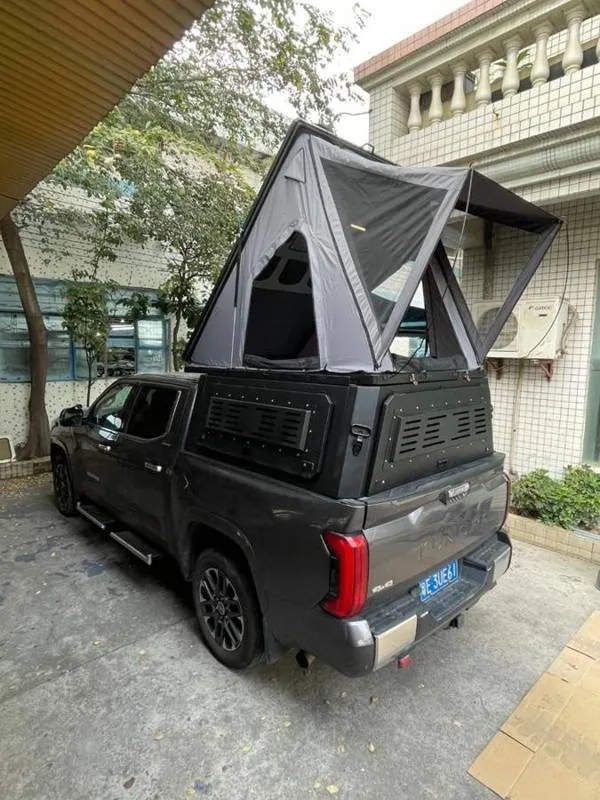
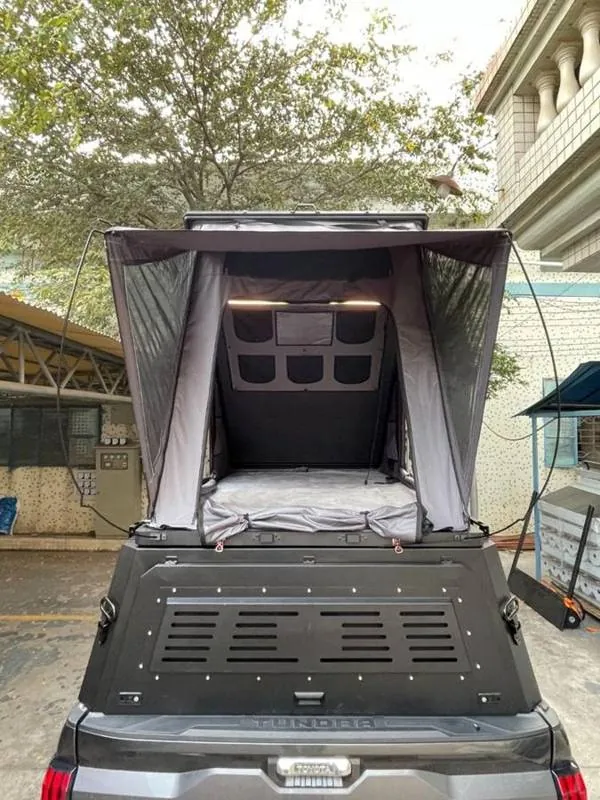
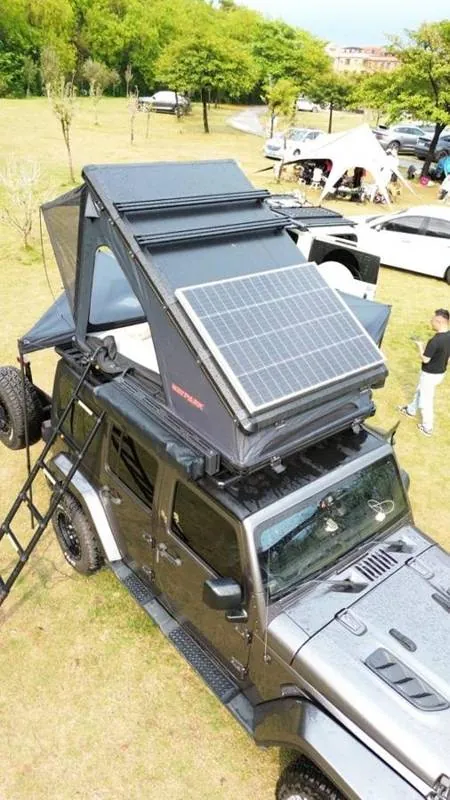
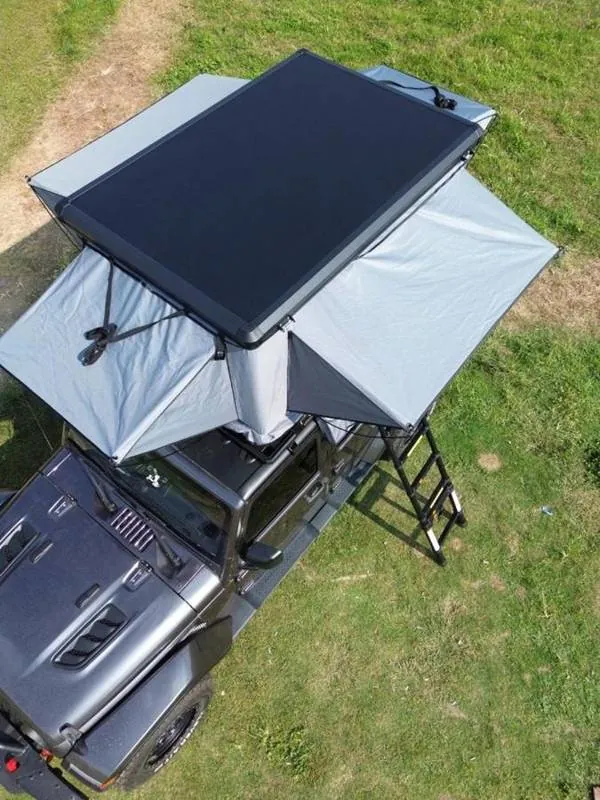
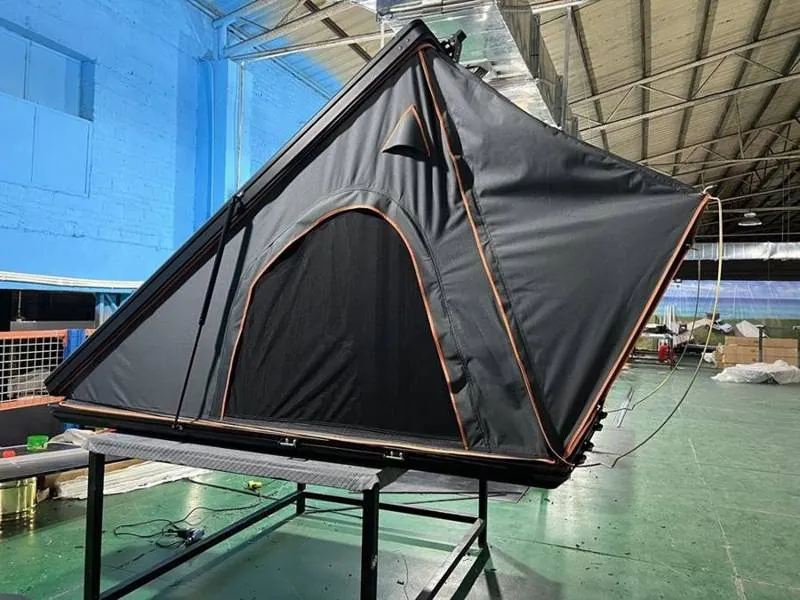
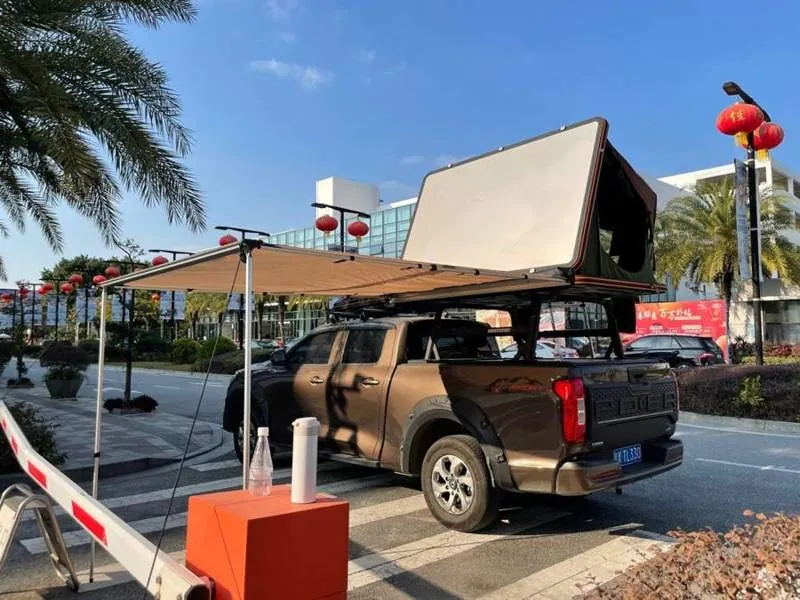
Quick Answer: Two ratings decide everything. Dynamic load is what your roof carries while you drive — this is the smaller number and the one your tent must fit under. Static load is what it carries parked — this is what holds the tent plus the people sleeping in it. Our roof racks rate 250 kg+ dynamic and 450 kg+ static; our canopies rate 150–500 kg static roof load depending on material and thickness, verified by load-test video. Weigh your tent, check it against the dynamic rating, and the decision makes itself.
Every rooftop-tent buyer hits the same wall: the product page lists one weight, the rack lists another, and nobody labels which is which. Get the pairing wrong and the failure isn't a dent — it's a tent arriving in your lane at highway speed.
Most "load rating explained" articles define the terms and leave you to do the math. Here is the math, with the only rule that matters and one worked example — using our own certified numbers so you can see exactly how a manufacturer should be able to show its work.
Dynamic vs static: the only two numbers that exist
Dynamic load — the roof's capacity while the vehicle moves. Bumps, braking and wind shear all multiply forces, so this number is always the lower one. It is governed by the weakest link: rack feet, canopy roof structure, or mounting points.
Static load — the roof's capacity parked. No motion, no multipliers, so this number is always higher. It carries the tent, the people inside it, and the gear stashed up top overnight.
Rule of thumb that holds everywhere: your dynamic rating is the gatekeeper. Whatever you mount must fit under it while driving. Your static rating decides how comfortably you can sleep.
The worked example: pairing a tent with our canopy
The inputs below are real for our products; substitute your own tent's weight.
| Item | Weight | Checked against |
|---|---|---|
| Rooftop tent (closed, driving) | 85 kg — the packed weight we build to | Static 150–500 kg canopy rating ✅ within even the lowest rating |
| Tent + 2 adults + bedding (parked) | 85 + 2×80 + 20 = 265 kg | Static — on a 2.5 mm aluminium canopy (300 kg static) or stronger, well within |
| Roof rack alone (driving) | — | Dynamic 250 kg+ rack rating |
While you drive, the roof only carries the closed tent — people and bedding ride in the cab or the bed. That's why an 85 kg tent fits even our lightest canopy (150 kg static, 1.5 mm steel) with room to spare — and on a 2.5 mm aluminium canopy (300 kg static), two adults can sleep on it parked with 35 kg of margin.
What to ask any supplier: "Show me the dynamic rating and the test evidence behind it." Ours is 150–500 kg static on canopies (2.5 mm aluminium: 300 kg), backed by load-test video; our racks rate 250 kg+ dynamic and 450 kg+ static. A number without a test is an opinion.
A note on published "rules of thumb"
You will read that static is "typically three times" dynamic across the industry. Treat that as folklore, not engineering — the ratio varies with structure. Judge every product on its own two certified numbers, never on an industry average. [旧稿"静态约为动态 3 倍"已删除:无来源 C 级数字,按事实闸门纪律移除]
Mounting and spread
Whatever the ratings, the load must reach them properly:
- Mount at the rack's designated crossbar positions; overhang changes the lever arms working on every bolt.
- Distribute weight fore-aft, not stacked high — a tall load amplifies every bump.
- Re-torque all mounting hardware after the first 100 km of corrugations or rough roads, and check it at every fuel stop on long dirt stretches.
Equipment in this guide
Trigallop Aluminium Canopy — 150–500 kg static roof load by material and thickness, load-test video available; aluminium alloy 2.0 / 2.5 / 3.0 mm; three-side gull-wing doors; 28-month warranty from the day you sign for delivery. US$125–450
Trigallop Roof Rack — 250 kg+ dynamic / 450 kg+ static; built to pair with our canopies for rooftop-tent setups. US$125–450
Keep reading
- Truck Canopy vs Tonneau Cover: 7 Differences That Decide
- Aluminium Canopy Pros and Cons: 6 Honest Answers
- ★ Editor's pick: Roof racks for rooftop tents
Ready to talk business?
Tell us your tent's packed weight and your truck model. We'll confirm the pairing against our certified numbers — and if your tent outrates our rack, we'll say so before you pay. [Get a fit check] [See the product range]
FAQ_SPLIT## Frequently Asked Questions
Can my canopy or rack carry more if I drive gently?
No — the dynamic rating already assumes real roads. Gentle driving reduces wear, not the rating's validity. Respect the number, not your optimism.
Does a rooftop tent void my canopy warranty?
Not with us: a roof load within the rated 150–500 kg static is normal use, covered for the full 28 months from the day you sign for delivery. What voids warranties anywhere is overloading and modified mounting points — keep both clean.
What if my tent plus rack exceeds the dynamic rating?
Move the tent to a stronger platform (our canopies out-rate our racks on dynamic load) or carry the tent in the bed while driving and mount it at camp. Never average your way under the number.
Do I need extra crossbars for a tent?
Usually the rack's supplied crossbars are rated as a system — adding random bars creates an unrated link. Ask us for the rated crossbar spacing for your tent model; we document the setup as a system, not parts.
Sources & References
No external data cited — every load figure in this article (canopy 150–500 kg static with test video; 250 kg+ / 450 kg+ rack ratings) comes from internal test records and our fact ledger, available on request.
Written by Trigallop Engineering Team · Reviewed by Ryan Gui · Updated 2026-10
Sources & References
No external data cited — every load figure in this article (canopy 150–500 kg static with test video; 250 kg+ / 450 kg+ rack ratings) comes from internal test records and our fact ledger, available on request.